Why Broken Key Extraction Demands a Trained Hand
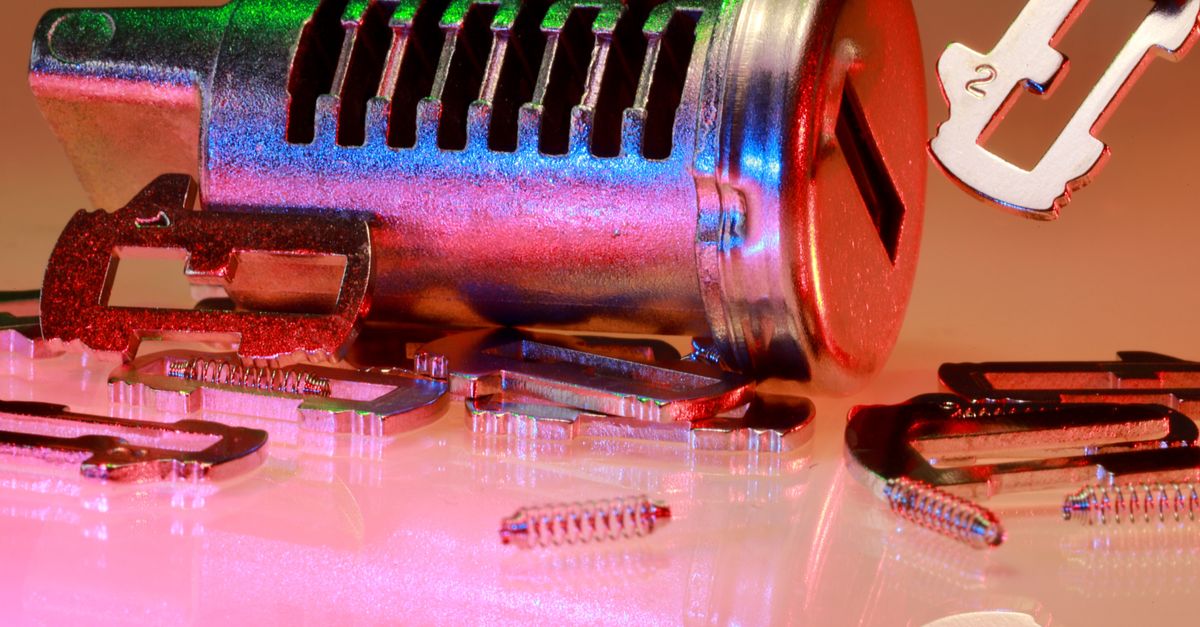
When a key snaps, the break rarely happens cleanly at the bow — the part you hold. More often the fracture occurs mid-blade or deep inside the keyway, leaving a sliver of metal flush with or recessed into the face of the cylinder. On a standard door knob lock, a technician uses a combination of extractor hooks, broken-key picks, and needle-nose probes sized to the keyway profile to grip the fragment's serrations and draw it outward without rotating or compressing the pins. On a mortise lock — the heavy-duty rectangular mechanism found in many older Hopewell Junction homes, commercial storefronts along Main Street, and multi-family buildings — the keyway is often deeper and the tolerances tighter, which means the extraction technique must account for the lock's internal cartridge and the position of the cam. Attempting removal with a bobby pin, tweezers, or a flathead screwdriver almost always results in the fragment spinning, the pins binding, or the cylinder scoring in ways that require full replacement instead of a simple extraction.
Our technicians train specifically on the full range of residential and commercial cylinder types common in Dutchess County — from basic pin-tumbler door knob locks on single-family homes to high-security mortise lock assemblies on commercial properties. That breadth of hands-on experience is what allows us to work quickly while keeping damage to a minimum. Where the cylinder condition permits, our goal is always a damage-free extraction that leaves the existing lock fully functional, saving you the cost and inconvenience of an unplanned hardware replacement.